
Example of HVSR analysis and automatic inversion of the curve in HoliSurface® 2025, winMASW® ACD-2025 now available, crucial role of Love Waves
INDEX:
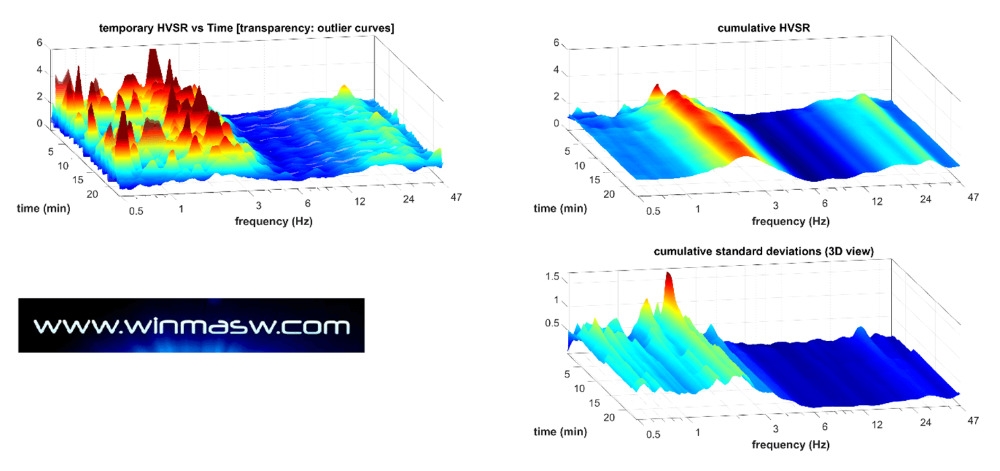
1. HoliSurface® 2025: example of HVSR analysis + automatic inversion of the curve
2. winMASW® ACD-2025 release now available
3. Love waves – Why they matter
1. HoliSurface® 2025: example of HVSR analysis + automatic inversion of the curve
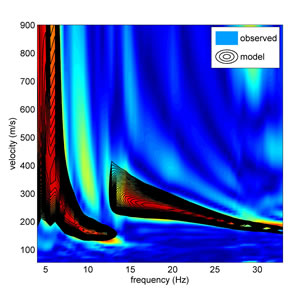
Do you know that with HoliSurface® 2025 you can perform fully automatic HVSR curve inversion?
Simply define a search space or a starting model and let the genetic algorithms at the core of HoliSurface® handle the optimization process. A small annotated example is available from HERE.
Take a look at the 2025 edition of the manual to discover all the features of HS. With minimal equipment (active and passive data from a single 3C geophone) and simple procedures, it allows you to define a robust Vs profile based on the joint analysis of several observables. And it also lets you perform many other analyses (vibration data, Standard Spectral Ratio, Miniature Array Analysis of Microtremors and much more).
The power of HoliSurface® in one question: how much equipment do you really need to get a reliable Vs profile?
-
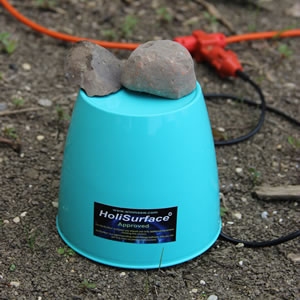
Using a traditional cable system, you need just one single 3C geophone plus your ordinary trigger [see this video tutorial]
-
Using seismic nodes (i.e., a cableless system that records in continuous), you need only two 3C nodes. Just two! [see the video below⇓]
Pack everything in one backpack, go to the field and deliver unambiguous Vs profiles, with performance far beyond standard MASW (remember that the accuracy of the obtained Vs profile depends on how many observables you jointly analyze and not on the number of geophones you deploy).
How many observables can you obtain through the HoliSurface® technique?
Find out more by consulting the manual and the articles available on our website!
Less equipment. More accuracy. That’s HoliSurface®.
2. winMASW® ACD-2025 now available
The ACD-2025 release of winMASW® Academy is the result of a significant effort (more powerful features coming in the 2026 release).
Remember that the quality of your analyses depends on both your skills and the software you use (i.e., the way you analyze your data!)
Even with the same hardware, results can differ significantly: it's the software that makes the difference.
winMASW® Academy, with its extensive suite of advanced and innovative methodologies and solutions, stands as a true one-of-a-kind in the market.
Discover more in the 2025 edition of the winMASW® manual: DOWNLOAD HERE
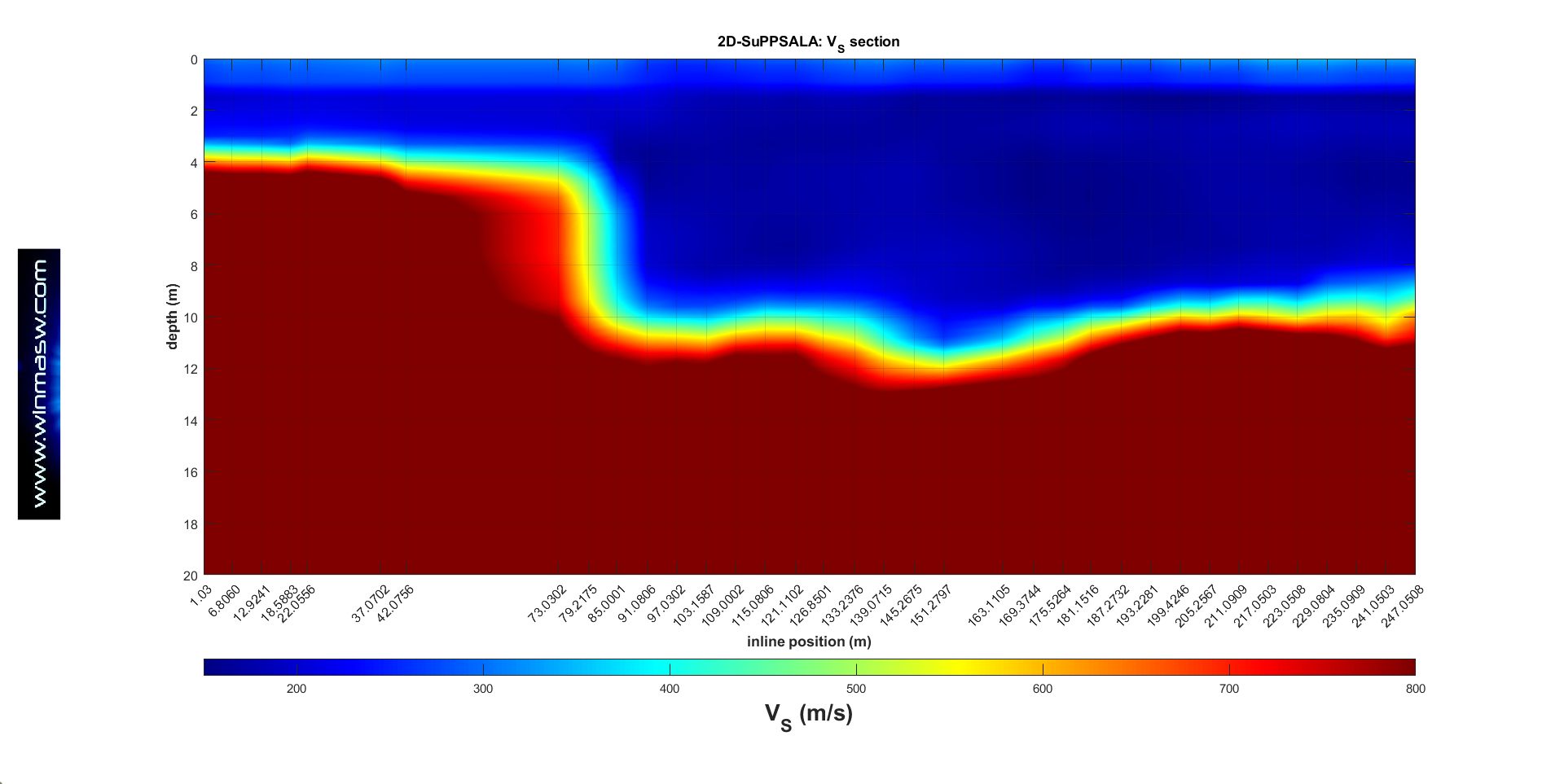
2D-SuPPSALA (Subsurface Profiling via Passive Surface Wave Data Analysis from Linear Array): a powerful tool in winMASW® Academy 2025 for obtaining 2D subsurface profiles from multi-component passive data.
No need to hammer around, with the risk of investigating only a very shallow thickness of the subsurface (as happens with the refraction technique).
3. Love waves – Why they matter
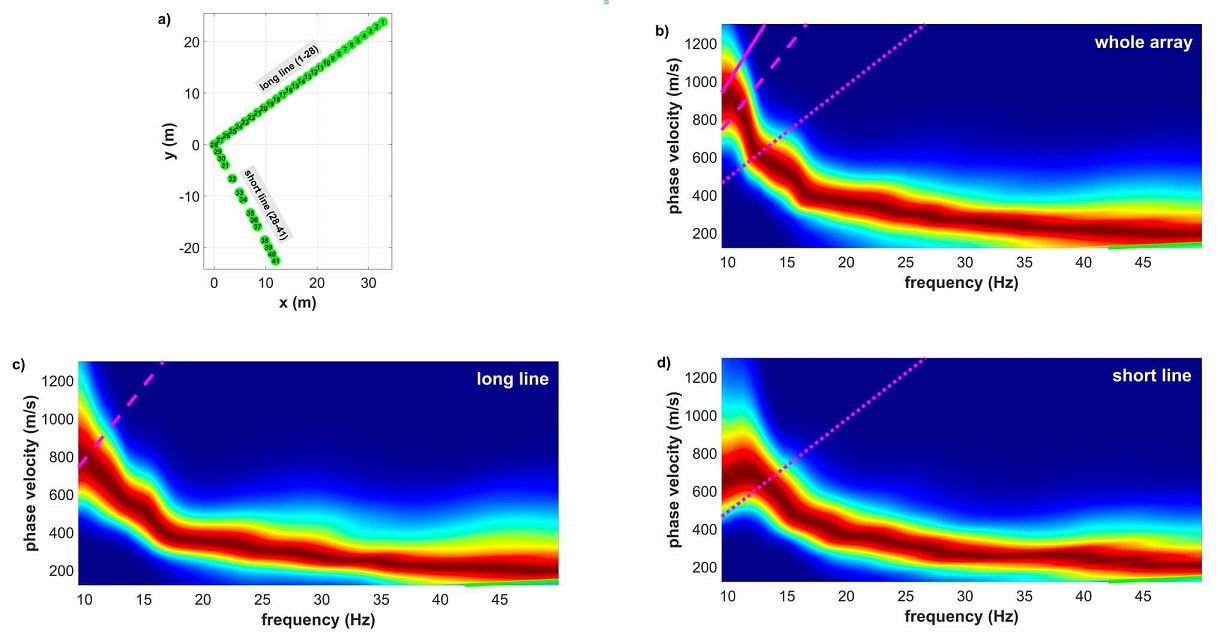
This must-read article explains why Love waves are crucial in determining accurate Vs profiles:
Title: Determination of the Vs profile at a “noisy” industrial site via active and passive data: The critical role of Love waves and the opportunities of multicomponent group velocity analysis
Authors: Dal Moro G. & Mazanec M., 2024
Journal: GEOPHYSICS – Society of Exploration Geophysicists (SEG), Volume 89, Issue 3
DOI: 10.1190/geo2022-0540.1
The study shows that Rayleigh waves (the standard MASW approach) can lead to erroneous or inaccurate Vs profiles, even when jointly analyzed with HVSR data. It highlights the critical role of Love waves and the opportunities offered by group-velocity analysis (i.e., HoliSurface®). Remember that the latter can be obtained using just a single 3C geophone.
- NEWS ARCHIVE
- share: